



There’s a hilarious sketch with the Wasian actor Quentin Nguyen-duy where he’s duel-wielding an OG copy of DFW’s Infinite Jest and a matcha latte while he’s trying to pick up a woman outside a subway station in Manhattan.
One of the funniest things you can see in New York, of course, is the Men Who Are Reading in Public, that is to say, they are transparently “reading” a paper book as a bit—as a form of attention-seeking behaviour so that they can get laid. Aside from the charming guilelessness of youth, this is indeed an incredibly funny indictment of how post-literate our society is.
“But how do you know they’re doing it performatively, Han?”
Listen buddy, I wasn’t born yesterday, I’m not autistic, okay—the way you can tell if a man is reading performatively is purely by way of intuitive judgment. It’s not dissimilar to those guys on the subway who are listening to music and pretend-drumming while they’re bobbing they’re heads, as if to say—“hey, did you know I like MUSIC? I’m actually not like OTHER guys—I’m a MUSICIAN. Thank you for your attention to this matter.”
There’s a million versions of this behavior in every society at every point in human history, and holding an OG copy of Infinite Jest is just the nth iteration of guys randomly doing pullups or pushups or calling attention to themselves with whatever the contemporary mating display dynamics happen to be.
Bret Easton Ellis has commented that paperbacks were once the original smartphones: a form of portable entertainment that people would bring with them everywhere to fill the space of dead time.
In the year 2026, the only apparent reason for a man to carry a paperback is to use it as as conversational prop to accompany a tote bag.
This is funny. We needn’t be critiquing this. It simply doesn’t matter at all.
Analog media are just one among many potential tools for status signalling (sexual or otherwise).
The traditional critique of signalling-motivated engagement with the arts is that it’s fundamentally corrosive to the underlying enterprise. If the primary motivation for engaging with literature is a sort of intellectual snobbishness or the desire to cultivate a surface-level aesthetic, then the content of the work seems obviously secondary to that. This is why Sam Kriss hates A24 movies for being thematically thin.1
But if we interrogate this phenomenon further, we start to understand that status-seeking behaviour has always been integrated with the cultural production of art. You’re telling me guys like Hemingway and Mishima weren’t narcissists? You’re telling me these guys weren’t writing bangers partly because they wanted to get pussy and/or bussy? You think Lord Byron wasn’t trying to get his fuck on?
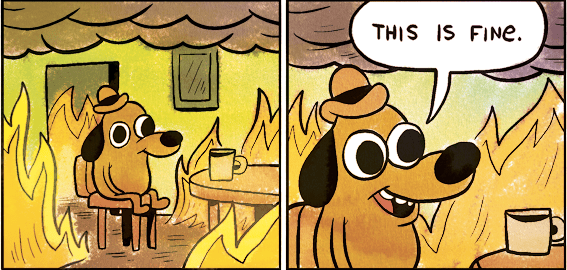
Art is unique in that even the most deranged, narcissistic, psychopathology-laden person is capable of creating narrative beauty. We’re not making spreadsheets here. We’re not fine-tuning large-language models. We can be a little bit chaotic. We can be a complete piece-of-shit human being, even. It’s not a character-test.
And that is because the artist is really just a conduit through which recombinant experience flows through the gate of consciousness and blooms into the vessel of a particular medium.
It’s fine, actually, if people engage with literary fiction partly (or even primarily) due to crass psychosexual or status-oriented reasons. Regardless of motivation, it still makes the number go up: the number of books, the number of readers, the number of people at literary parties in Manhattan, and so on. Who the fuck cares. When the number goes up, you open up the possibility for true greatness. Probability is your friend here. The more the merrier. Take the work seriously, not yourself.
Okay, that’s valid.
The original IJ cover from 96 is the one with the clouds. Thats the 2016 edition cover
Interesting. In the 1980s I took the train to work. People read paperbacks and newspapers. Even those who couldn't get a seat and had to stand. And when I traveled to London and Paris in the 80s and 90s, same thing. London had the most readers and some of them could easily hold a tome as big and heavy as jest while the tube car rocked and rolled. And they weren't doing if as performance. Writing was generally universal. Not like now.
It's fascinating to me how now, elites, or self-perceived elites, think reading is passe or performative. And I see the same downward spiral for language. Emojis and grunts, snarls, hoots of laugher replacing real conversation.
On a broader scale, we see the ghetto culture rising up and becoming the popular culture. Fascinating and sad.
Reading has declined for a number of reasons--the internet, the 'smart' phone, and I would ad, the decline of the culture into woke nonsense and the decline of story. Yes, novels are published, but story has suffered. Why would someone (in 1985) heft a 500 page paperback on a rocking subway train? Because the story was compelling and well written and based in reality, not bullshit fantasy realities like we now have.
Anyway, no matter how dysfunctional and stupid this culture gets, I will continue to write good story that's engaging and based in what I consider to be reality, modern publishing be damned.
Watch for my latest coming in July. Seeing Sunny Again, stories that the schmucks who run Big Publishing would never publish because they're too honest about the real world.
Oh, and as far as picking up women is concerned, I would tell young men to just be themselves. The current madness is unsustainable. Reality will have its day.
Best on your literary journey!