


I was reading Owen Yingling’s excellent piece, The Great Zombification, and it’s yet another data point that we’re heading to a post-literate age dominated first by short-form video, and soon, by immersive AR/VR experiences that will stack narrative superstimuli into a packet so appetizing that broad swathes of the population will probably drop out of participating in base reality altogether.
Owen is an interesting character in that he feels like the exception that proves the rule—talented, hyper-literate, under 25—and a massive outlier among his generational cohort.
Literary pessimism is very much a millennial-and-older generational lamentation about the misbegotten youth, which is funny, since it might well be boomers who have the worst cog-sec when it comes to info-ops embedded into the slopstream of the Facebook news feed, Tik Tok, and so on.1
But the thing we have to remember is that complete literary extinction doesn’t seem to be a realistic possibility. Theatre plays, an even more niche art form dating back several millennia, still exist among a tiny substratum of the population.
It’s really, really hard to annihilate an art form because of the breadth of human cognitive diversity. Even if literary fiction becomes a “special autistic hobby” dominated by enhanced humans genetically engineered for upgraded attention spans, it’ll still exist among some tiny faction of the (spiritual) elite.
What we writers are mourning, really, is the relative transition of the novelist as a 20th century, titanic personality that held court somewhere near the center of the culture—of Hemingways, Mishimas, and so on being considered the artistic peers of film directors, actors, and so on.
The structure of literary celebrity was of course a sort of proto-influencer culture at the time, and market capitalism has now refined the maximally dopaminergic elements of influencerdom and dispensed with the baggage of aesthetic content.
That is to say, being a novelist has transitioned from a high-status activity to a no-status activity.
This is the real affliction of our current crop of novelists, methinks. At least in part, it’s middle-aged guys subconsciously whining “but why can’t writing books get me pussy?”
I think this fall from grace is beautiful, actually.
Because there is no material (or even plausibly) social upside to the act, the system of literary production increasingly selects for purists.
And, more importantly, these purists are situated at the base of an exponential that will soon swallow everything else whole.
I’m speaking, of course, of the singularity:

Think of a butterfly suspended in amber, what is it that makes it special?
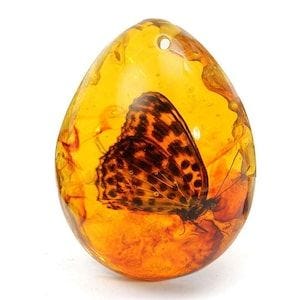
It’s the time that it was frozen in. It’s the second before impact, it’s a fossil that could only ever exist in the gate between before and after.
If you are reading this, you are living in the most interesting time in human history. And that means that any art form—literary or otherwise—that cannot yet be produced by a machine, contains within a unique prehistorical value in the form of a soul that could not be duplicated from an ocean of data.
In short, the machine cannot yet clone the soul of the novelist.
We may well all be a few short years from some kind of collective death, but the artist fights strongest before their demise.
I think we sometimes forget how many 60+ Americans have simply been driven insane by things like politics Youtube, low-information culture-war slop memes, etc.
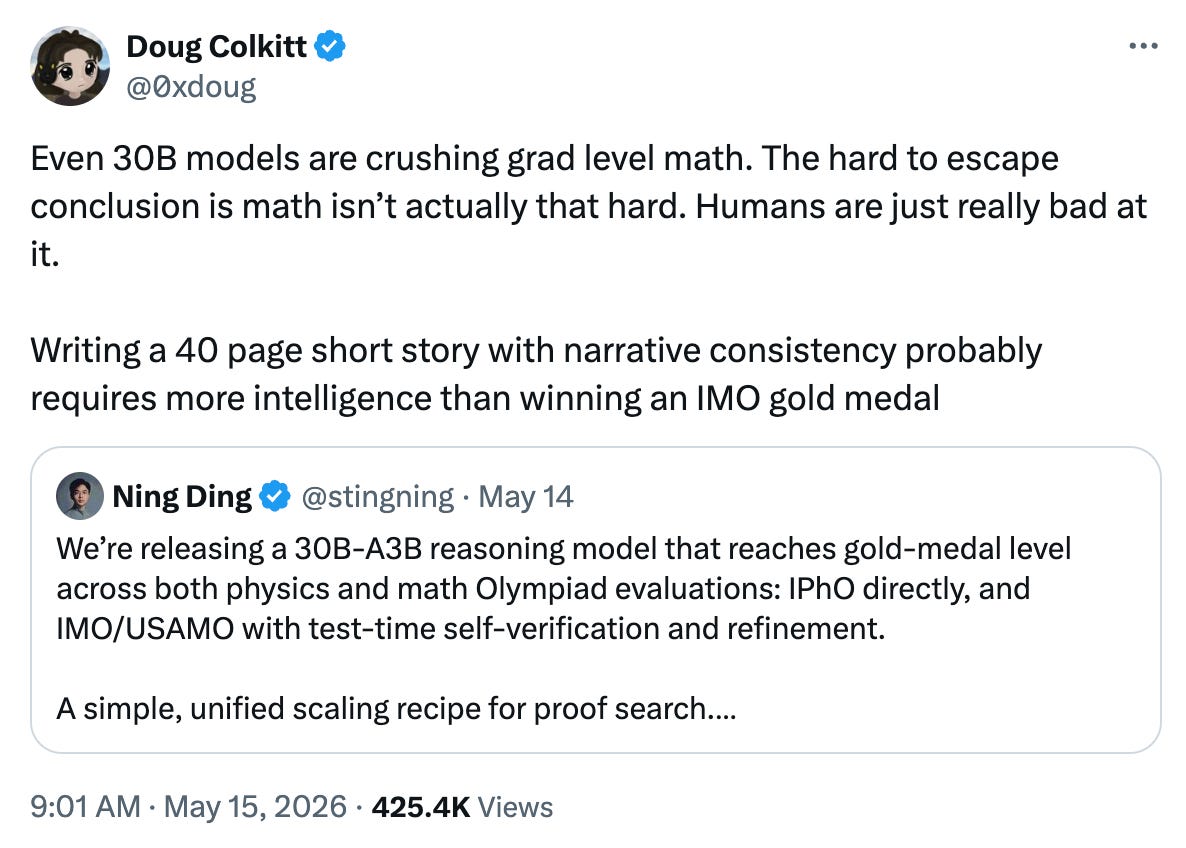
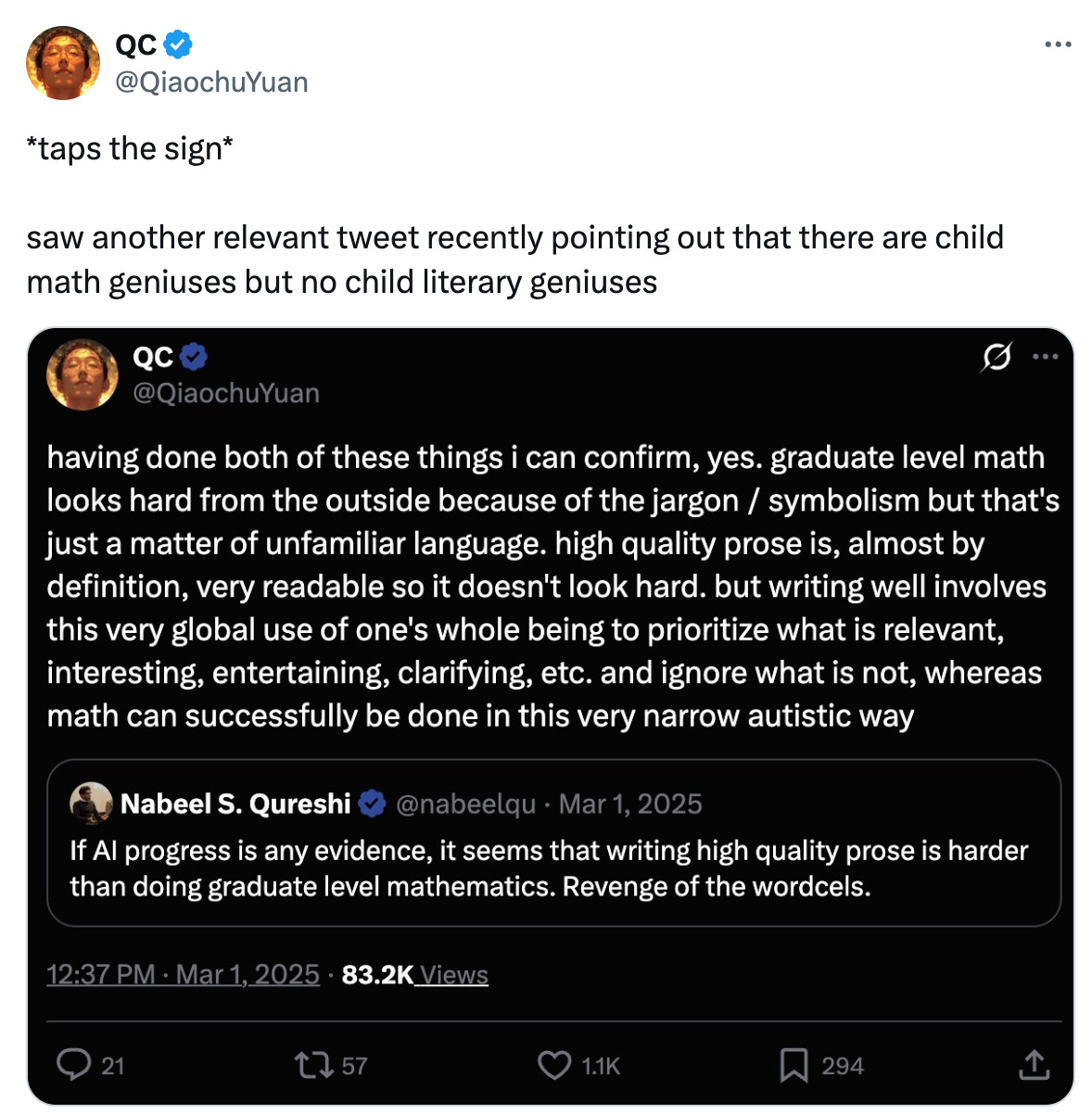
I wrote a fantasy novel and a programming language. The novel was harder.
Thank you for bringing up boomers/Gen X as uniquely prone to the sins of AI. I know full well the state of newer Gen Z AI brainrot, as someone currently in university settings, *but* Gen X/boomers did not grow up with it and did not grow up with adults yelling about how it will take their jobs and is at the same time necessary to have a job, and they are just as bad. And they were broadly educated by a cheap/affordable university system where, for awhile, the English major (and other majors that teach media literacy) flourished. Their susceptibility to it is therefore terrifying!
As to the other stuff--I completely agree, and maybe a solution to it is, in addition to acceptance, just some cool hipster posturing. We *are* cool. Art *is* awesome. If you don't get it, maybe you should try to get better at getting it, or at least acknowledge it's one of those awesome things in life you'll never get (for me, that's jazz and Latin). Channeling some Oscar Wilde might be good for all of us here.